
3 people were available. Nobody stepped in.
That morning, everything was in place for it to work. That was exactly the problem.
KairoProject
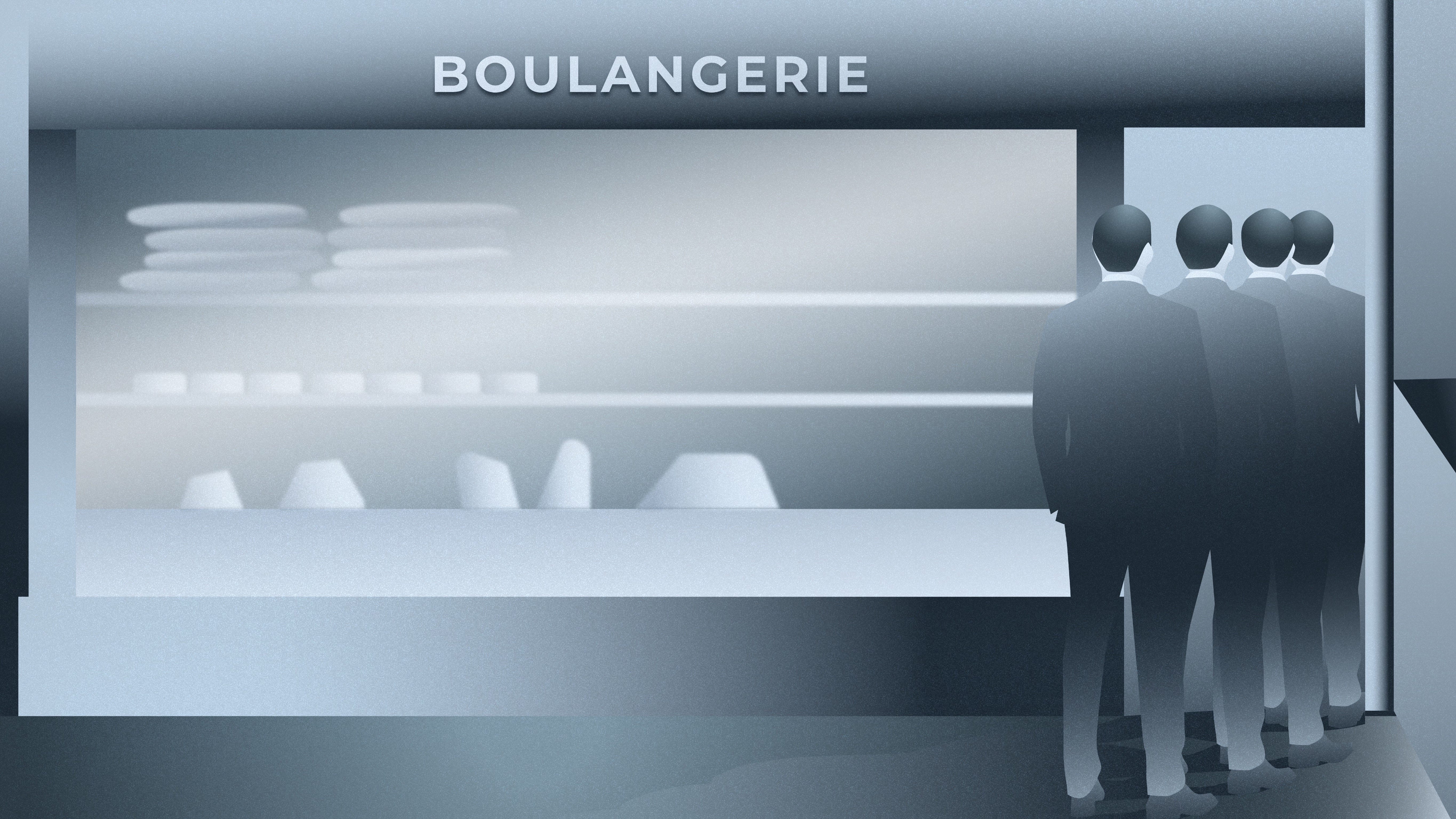
Market day. Holiday weekend. A tourist destination.
A bakery that should know how to handle a crowd.
30 people in line.
No announcement. No estimated wait time.
Just the queue — not moving.
I checked when I left: 40 minutes.
· · ·
Behind the counter: 2 staff members.
Not panicking. Not slacking either.
Just trapped in a space that made the job nearly impossible.
One cash register. A narrow corridor shared between the bread section and the pastry display.
They kept crossing paths. Getting in each other’s way.
One of them dropped a cake — the last one of its kind.
Not careless. Just cornered by the setup.
At some point, the bread sold out.
No one told the people still waiting in line.
Some found out at the counter, after 30 minutes of standing there.
· · ·
Then the detail that changes everything.
In the prep area, just behind the counter:
3 more people. Present. Available.
Cleaning.
The resources were there.
The situation was visibly falling apart in real time.
Nobody reassigned anyone.
“ This wasn’t a staffing problem.
It was a management problem. ”
The constraint wasn’t a lack of people.
It was the absence of anyone — or any mechanism — able to read the full picture and act on it.
The single register: fixable.
The cramped layout: fixable.
The silent stock-out: fixable.
None of it was fixed.
· · ·
The most telling part is the financial consequence.
The queue did its job: it attracts people, signals quality.
New customers joined.
Others saw the line and walked away.
Of those who stayed: no bread, one less cake.
Poor conversion on a peak day.
The footfall was there. The potential was there.
The disorganization turned an opportunity into a straight-up loss —
without anyone, at any point, actually reading what was happening.
“ We act on what we can see.
The real problem is somewhere else. ”
Project management works the same way.
Multiple projects running in parallel.
Shared resources — a specific skill, a decision-maker, a tool.
Dependencies that no one is tracking from above.
You notice the symptoms: missed deadlines, back-to-back meetings, constant reprioritization.
You act on what’s visible.
The real constraint stays hidden.
Like those 3 people cleaning while the queue grows.
ABOUT KAIROPROJECT
This is exactly the kind of situation we built KairoProject to make visible — finding where the real constraint lives in a project portfolio, before available resources go to waste.
The problem is almost never the volume of work.
It’s the absence of a clear, global read on the system —
and therefore no steering at the right place, at the right time.
Seeing the system is already the beginning of changing it.
KEY TAKEAWAYS
Having the resources isn’t enough — you need to deploy them where it matters, when it matters
An unidentified constraint turns opportunity into loss
The absence of global oversight often costs more than a lack of resources
Seeing the system as a whole changes the decisions you make
2 minutes · personalized result
Newsletter
Want to go further?
Get regular, actionable takes on multi-project prioritization, the Critical Chain, shared resource constraints, and steering practices.